


Dirt: More Complicated Than It Looks
Dirt. We walk over it, stand on it, rarely think twice about it. Yet everything we design depends on how that ground behaves.
In February, Ladies in Land (Houston Chapter) hosted a behind the scenes tour of Universal Engineering Sciences (UES)’s lab. As one of our trusted partners, their work has quietly shaped many of our projects from community centers in Houston to recreation facilities in Arkansas to waterpark resorts across the country. This visit was a chance to step out of the report and into the process.
We started with how they investigate a site. Field teams drill borings based on the scale and type of project, collecting soil samples at different depths. These samples are then brought back to the lab and tested for moisture, density, and composition. From there, recommendations are developed that directly influence foundation systems and construction strategies.
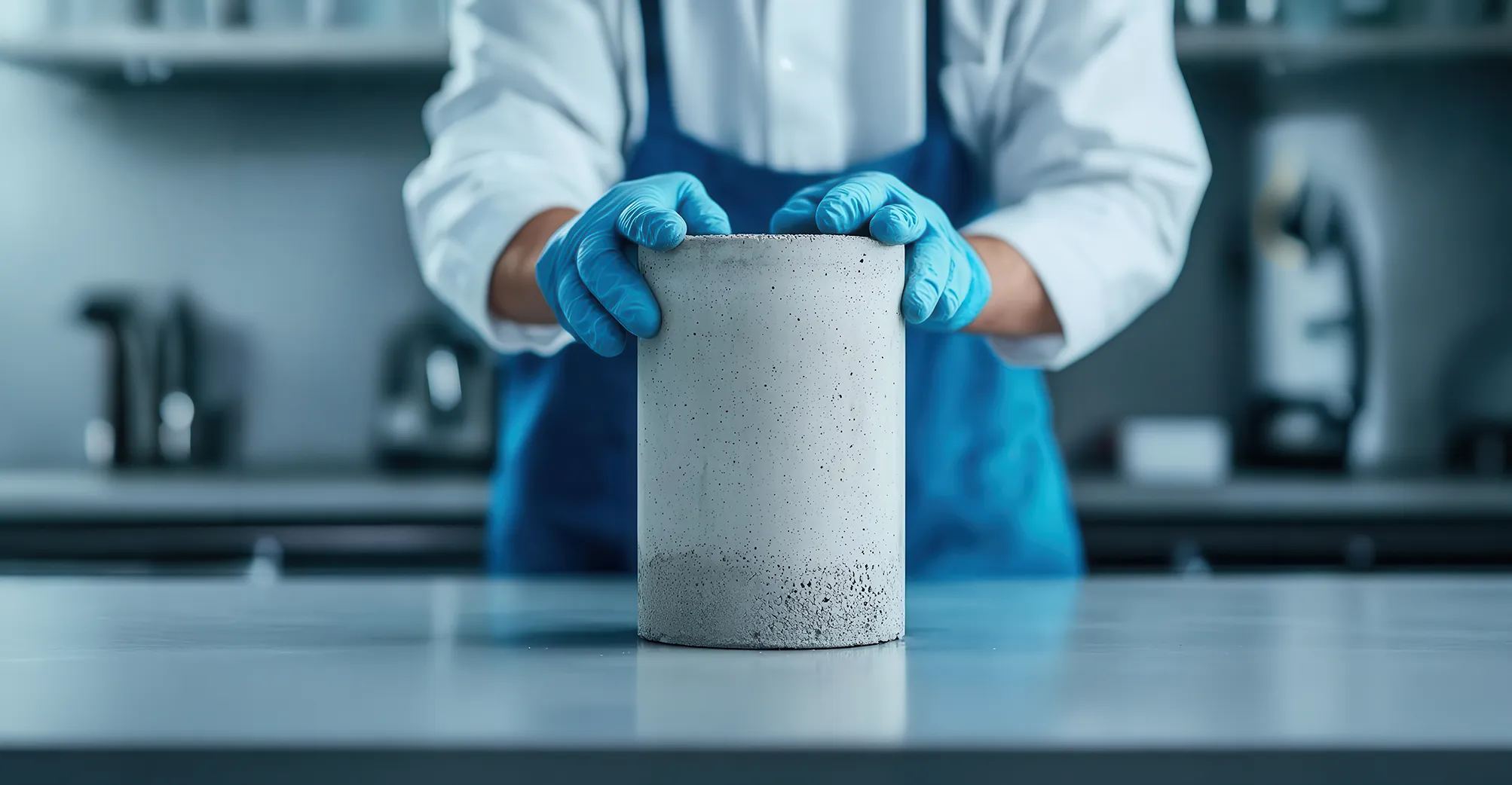
Inside the lab, we saw that process played out in real time. Concrete cylinders being tested for early strength just days after curing. Temperature controlled rooms storing soil samples, so their properties remain consistent before testing. Shelves filled with materials ranging from sand and gravel to fat clay and lean clay. Not just categorized by what they are, but by how they behave over time.
It is something we talk about often in design meetings with geotechnical engineers but seeing it in person changes your perspective. What can feel like a line item in a report is actually a hands on, highly controlled process that directly informs how a building performs long after it is built.
In a place like Houston, that matters even more. The ground is constantly shifting expanding and contracting with moisture, creating movement that eventually shows up in slabs, walls, and structure. It is easy to think of that as something solved later, but in reality it shapes decisions from the very beginning.
And that is the part that stuck with us. None of this was new information. We rely on it every day. But being in the lab reinforced how critical it is to what we do.
At Project Luong, we talk a lot about designing experiences and creating places people want to be. But those experiences only work if they are built on something that performs. Understanding the ground conditions is not separate from design. It is design.
Now that we are heading into spring, it feels extra fitting. Just like everything outside is starting to grow, a strong foundation is what allows everything we build to last.


