


Why My Boss Sent Me to an Indoor Waterpark
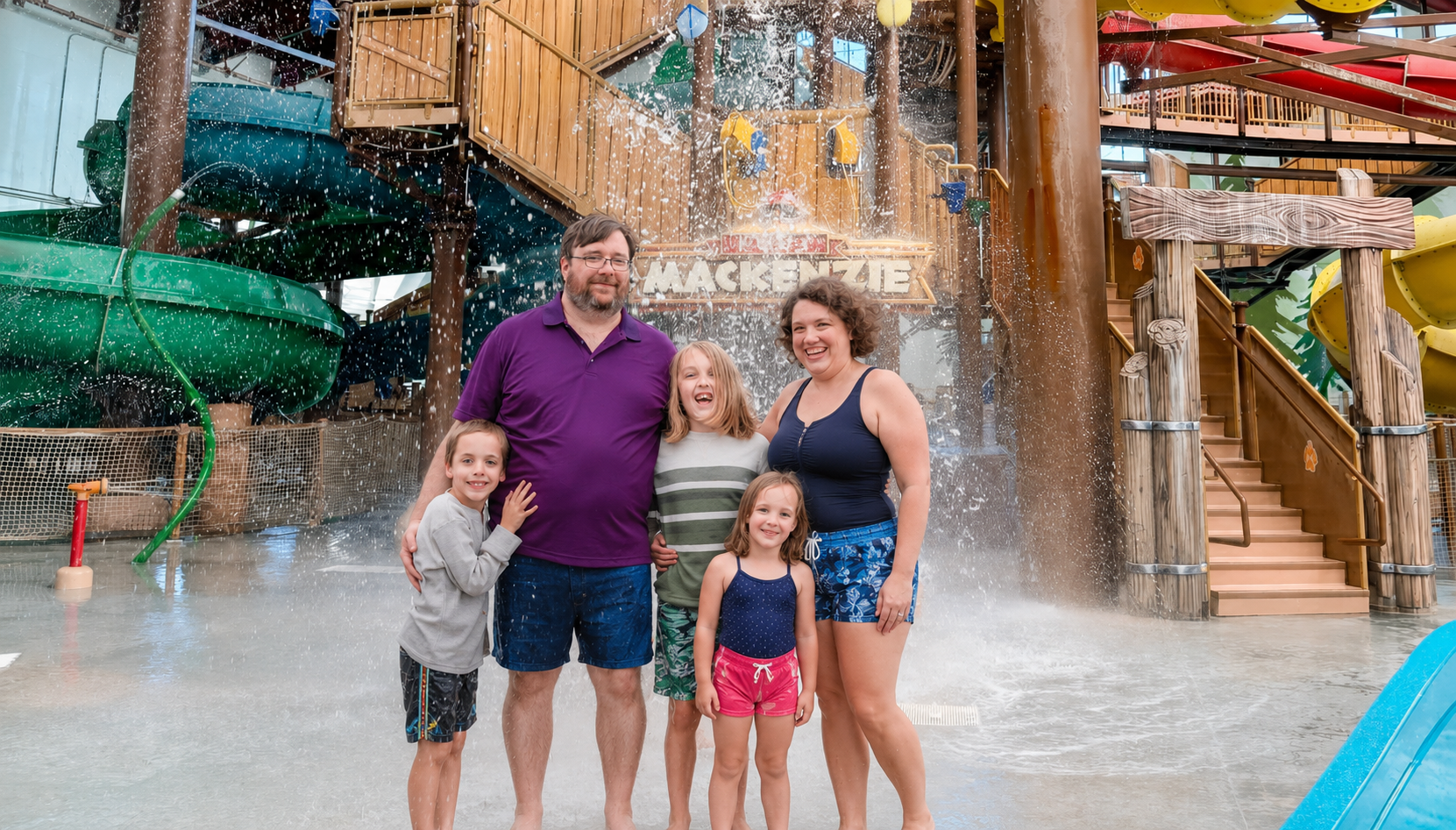
My boss told me to take my kids to an indoor waterpark resort.
Stay for two nights. Rent a cabana. Experience everything.
It wasn't a vacation. It was one of the most valuable design exercises of my career.
At Project Luong, we believe great design starts by solving the people problem first. Sometimes the best way to understand people is to become one of them.
When I found myself helping design a destination resort with an indoor waterpark, retail, restaurants, and a family entertainment center, I realized there was only one way to truly understand the guest experience. I needed to live it, not as a designer walking a project for an hour, but as a parent juggling three kids through an entire weekend.
My boss didn't hesitate.
"Go visit a destination waterpark resort," he said. "Take your family. Stay two nights. Rent a cabana."
So that is exactly what I did.
I packed up my family of five, left the office early on Friday, and headed to an indoor waterpark resort. The drive to the closest indoor waterpark resort wasn't bad, minus the traffic. A couple hours later, we had made it.
I expected a fun family weekend. What I found was something far more valuable.
The moment we walked into our family suite, I could tell someone had carefully considered the story they wanted guests to experience. My kids immediately claimed the bunk beds while I noticed how every detail balanced playful moments for children with comfort for adults. It felt intentional.
My children are 5, 8, and 12 years old. Anyone with kids knows family vacations are less about relaxing and more about logistics. Every activity has to appeal to different ages. Every outing becomes a series of compromises. Parents spend so much time managing everyone else's experience that they rarely get to enjoy their own.
The family entertainment center solved that problem remarkably well. My oldest had enough independence to explore interactive games and complete a scavenger hunt while my younger two tackled ropes courses, zip lines, and dance parties. For one of the first times in a long while, everyone was genuinely having fun at the same time.
The next day we spent nearly the entire day inside the waterpark. That's when my designer brain really switched on.
Some decisions immediately stood out:
• Sightlines made supervising multiple children dramatically easier.
• The main entrance offered immediate orientation instead of forcing guests to figure out the layout.
• Attractions grouped by age reduced frustration for families.
• Navigation felt intuitive instead of overwhelming.
Just as valuable were the things that didn't work.
Small inconveniences appeared everywhere:
• One towel hook for five people.
• Parents sitting in circulation paths because there wasn't enough seating.
• Water constantly tracked into adjacent spaces.
• Crowded walkways filled with strollers and bags.
• Heavy doors.
• Little effort to soften the constant noise.
None of these issues ruined the trip.
Together, however, they slowly chipped away at the experience. Individually they were small. Collectively they became exhausting.
That may have been the most important lesson of the weekend.
Great guest experiences are rarely defined by one spectacular feature. They are shaped by hundreds of thoughtful decisions that remove friction before guests ever notice it exists.
I returned to the office Monday with pages of notes, photos, sketches, and observations. More importantly, I came back with empathy. I had experienced the project the same way our future guests would experience ours.
That perspective will influence every decision I make as we continue designing destination resorts and family entertainment experiences.
The best design is often invisible.
Guests rarely notice when a towel hook is exactly where it should be, when sightlines allow parents to relax, or when circulation simply makes sense. They just remember having a great weekend with their family.
That is what we are really designing.
Not buildings.
Better experiences for the people who use them.


