Fulshear Wells Resort

Fulshear Wells Resort
CLIENT
THE OLD 300 DEVELOPMENT COMPANY
SECTOR
DEVELOPMENT
HOSPITALITY
STATUS
CONCEPTUAL

Project Luong was the developer and architect behind Fulshear Wells Resort, a mixed use destination designed to bring hospitality, recreation, and entertainment together in a single walkable district. Located in the rapidly growing Fulshear area west of Houston, the project explores how a major recreational anchor can catalyze long term economic development while creating new lifestyle amenities for the surrounding community.

The concept integrates resort hospitality, indoor and outdoor water recreation, retail, and public gathering spaces organized around a central lagoon environment. By combining destination attractions with everyday community experiences, the project demonstrates how thoughtful development planning can transform a single site into a regional destination capable of supporting tourism, entertainment, and long term mixed use growth.

The Design

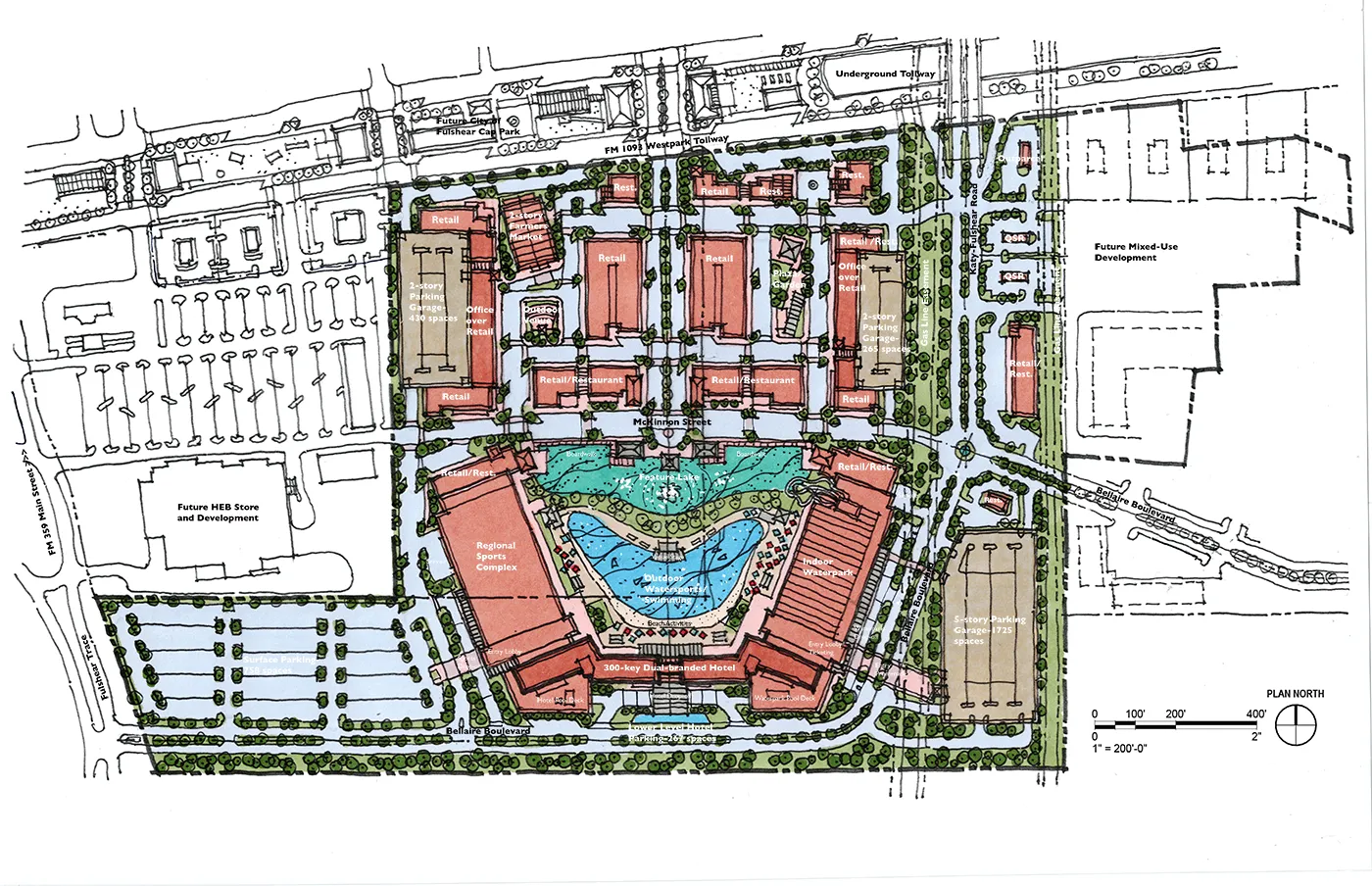
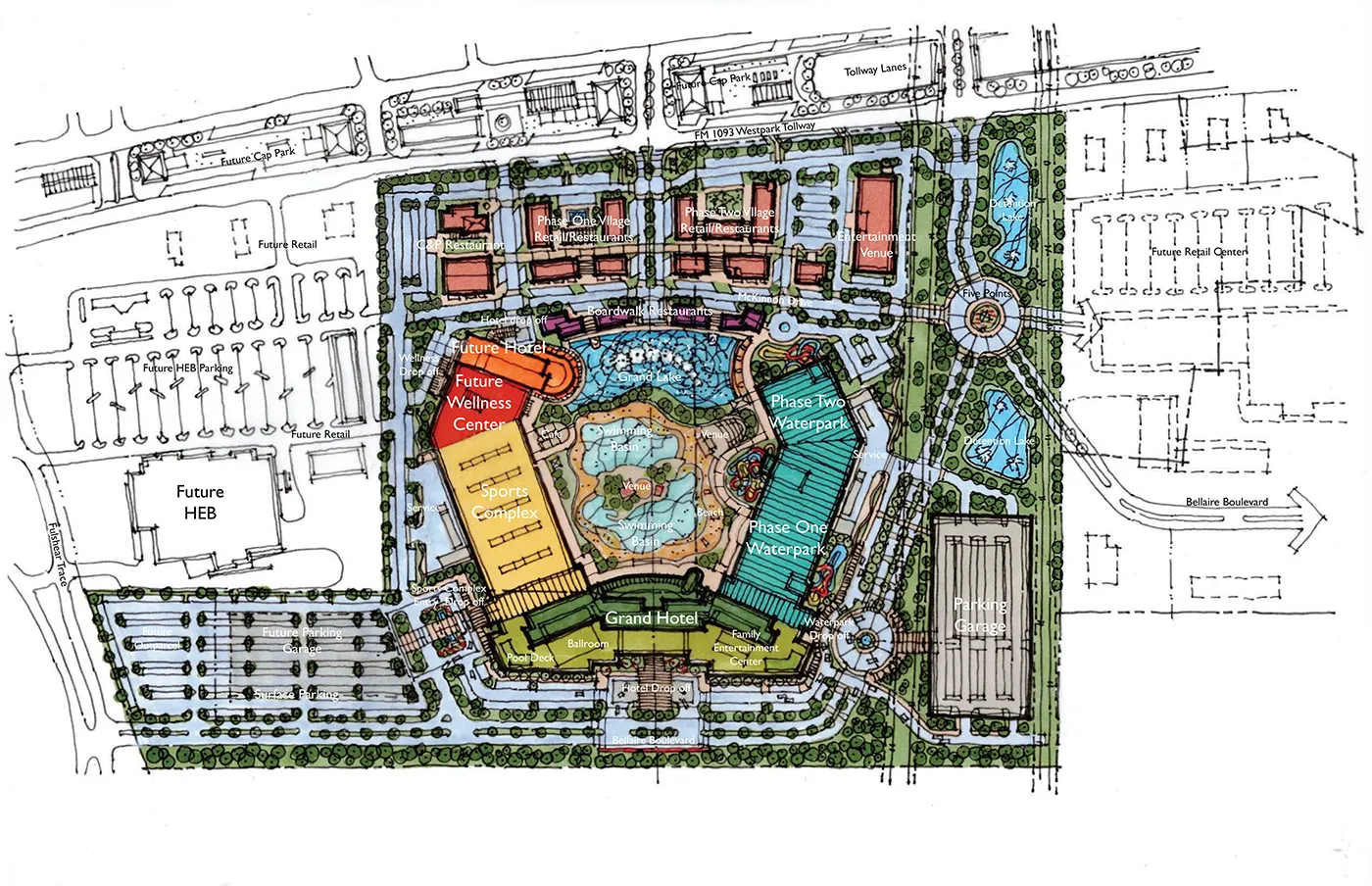
The design of Fulshear Wells Resort is organized around a strong pedestrian promenade that draws visitors through the development and toward a central lagoon plaza. Retail storefronts and restaurants line both sides of this primary corridor, creating an active street environment that gradually opens to a waterfront gathering space anchored by fountains and views across the lagoon.

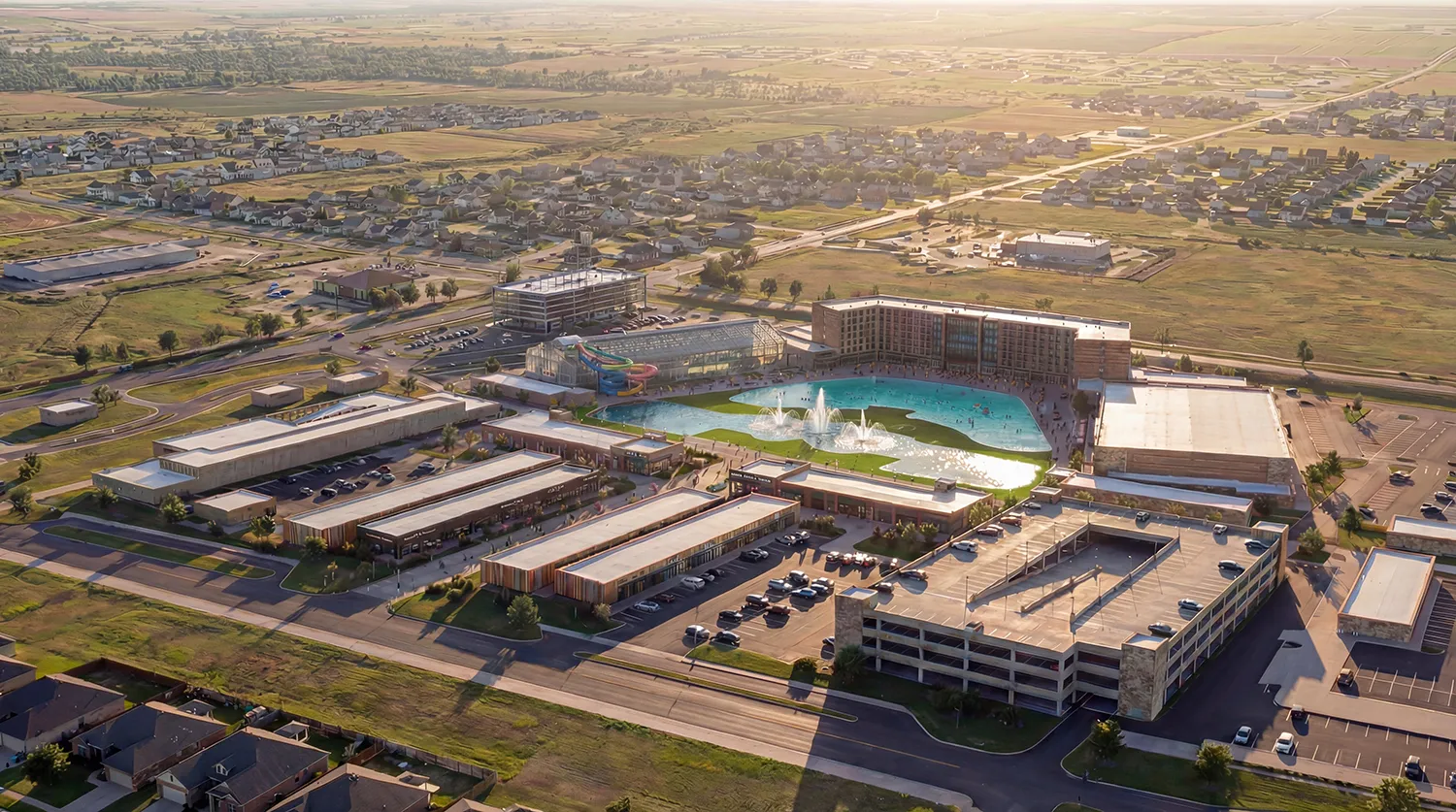
This central lagoon serves as the heart of the district. Designed as both a visual centerpiece and recreational amenity, the water creates a resort style environment where visitors can relax along the shoreline, gather for events, and experience the surrounding retail and hospitality spaces. The lagoon edge is activated with boardwalk style circulation, dining terraces, and gathering areas that encourage movement and interaction throughout the district.

A resort hotel frames the far edge of the lagoon and establishes a strong architectural backdrop to the waterfront. Positioned to overlook the lagoon and entertainment district, the hotel creates a visual anchor for the development while supporting extended stays and destination tourism.

On the edge of the lagoon district sits a large indoor waterpark designed to operate year-round. The facility incorporates OpenAire retractable roof technology, allowing the building to transition between indoor and outdoor environments depending on weather and season. This flexibility allows the waterpark to function as a comfortable indoor attraction during cooler months while opening to the surrounding lagoon environment during warmer seasons.

Throughout the site, the development is organized to prioritize walkability and public space. Retail buildings frame the primary pedestrian corridors while landscaping, plazas, and waterfront pathways create a layered sequence of gathering spaces that connect the different components of the resort district.

No items found.
No items found.

Development Strategy

The development strategy for Fulshear Wells Resort focuses on establishing a strong recreational anchor capable of driving long-term mixed-use growth. Rather than relying solely on traditional retail development, the project introduces destination attractions that bring visitors to the site and support surrounding hospitality and commercial uses.

The lagoon and indoor waterpark act as the primary catalysts for the district, generating year-round activity that supports restaurants, retail, and entertainment venues throughout the development. By creating an environment where visitors can play, dine, shop, and stay overnight, the project transforms a single visit into a multi-day experience.

The master plan also introduces a structured parking garage and organized vehicular circulation that accommodates large visitor volumes while preserving a pedestrian focused public realm within the heart of the development. Surrounding parcels remain flexible, allowing future phases of hospitality, retail, and entertainment development to evolve as market demand grows.

Through this concept, Project Luong demonstrated how integrated architecture and development planning can create a destination environment that strengthens tourism, supports economic growth, and establishes a new regional gathering place for the community.

No items found.
No items found.

No items found.
No items found.

No items found.
No items found.

No items found.
No items found.

RESULTS + VITAL STATISTICS